

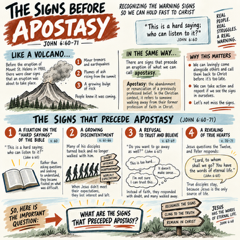
Just as Mount St. Helens showed warning signs before its eruption, Scripture reveals that there are often warning signs before someone walks away from a professed faith in Christ. In John 6, many who had followed Jesus turned back when confronted with His difficult teaching.
This sermon examines the warning signs that precede apostasy: becoming fixated on the hard sayings of Scripture and beginning to grumble against the Word of God. Yet the passage also points us toward the proper response of genuine faith. Rather than turning away when we encounter difficult truths, we are called to cling to Christ, trusting that He alone has the words of eternal life.
The sermon concludes by asking why some walk away while others remain, emphasizing both the sovereignty of God in salvation and the importance of genuine, persevering faith.
Sermon Outline
Introduction: Warning Signs Before an Eruption
The warning signs preceding the eruption of Mount St. Helens
Apostasy defined as abandoning a previously professed belief
The importance of recognizing spiritual warning signs
1. Before Apostasy, People Often Become Fixated on the “Hard Sayings” of the Bible
John 6:60
The disciples struggled with Jesus’ difficult teaching
The danger of focusing on what is hard while neglecting what is clear
Difficult passages in Scripture are real, but they must be approached humbly
The Bible clearly reveals what is necessary for salvation
The proper response: “Lord, to whom shall we go? You have the words of eternal life.” — John 6:68
2. Before Apostasy, People Often Begin to Grumble at the Word of God
John 6:61
The disciples’ grumbling resembles Israel’s grumbling in the wilderness
The danger of viewing God’s Word as outdated, unloving, or untenable
Good questions can become sinful grumbling when we doubt God’s goodness
The proper response: Rejoice in the Word as the living and life-giving Word of God
Conclusion: Why Do Some Walk Away?
John 6:62–69
The flesh cannot give life; the Spirit gives life
Those who walked away never truly believed
Genuine believers persevere because God’s grace sustains them
The call is not merely to understand every difficult saying, but to look to Jesus
Final confession: “You are the Holy One of God.” — John 6:69
Study Questions
Understanding the Text
What warning signs preceded the eruption of Mount St. Helens, and how do they illustrate the sermon’s main point?
What is apostasy? How does the sermon distinguish apostasy from merely struggling with difficult questions?
What specifically caused many of Jesus’ disciples to turn away in John 6?
What does Jesus mean when He asks, “Do you take offense at this?” (John 6:61)?
What is the difference between wrestling honestly with a difficult passage and grumbling against the Word of God?
Examining Our Hearts
Are there particular teachings of Scripture that you find yourself fixating on while neglecting the Bible’s clear message of the gospel?
Have you ever found yourself thinking of God’s Word as outdated, unloving, or incompatible with modern life? What does that reveal about your view of God?
How can good questions about Scripture gradually turn into grumbling?
What are some warning signs that someone may be drifting spiritually before they openly abandon the faith?
How should we respond when we encounter a passage of Scripture we do not understand?
Looking to Christ
Why is Peter’s response in John 6:68 such a powerful expression of faith?
What does Peter recognize about Jesus that makes leaving Him impossible?
How does the truth that Jesus has “the words of eternal life” shape the way we approach difficult doctrines?
According to John 6:63–65, why is the work of the Spirit essential to genuine faith?
How does 1 John 2:19 help us understand the relationship between outward profession and genuine saving faith?
Application
How can we lovingly come alongside someone who appears to be drifting from Christ?
What practical steps can we take when we find ourselves becoming discouraged or troubled by difficult biblical teachings?
How can we cultivate a posture of humility, trust, and submission toward God’s Word?
What does it look like in daily life to say, “Lord, to whom shall we go?”
What is one warning sign you need to take seriously in your own spiritual life, and how should you respond to it?