

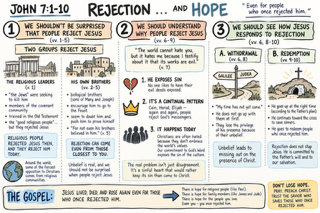
Jesus knew what it was like to be rejected. In John 7, we see Jesus rejected by the religious leaders and even by his own brothers. Why do people reject Jesus? What happens when we reject him? And is there hope for those who have turned away from Christ?
As we walk through John 7:1–13, we see three important truths:
We shouldn’t be surprised that people reject Jesus. Jesus was rejected by the religious leaders and by members of his own family. Rejection can come even from people who are religious or very close to the things of God.
We should understand why people reject Jesus. Jesus says that the world hates him because he testifies that its works are evil. Our sinful hearts don't want to have our sin exposed.
We should see how Jesus responds to rejection. Jesus withdraws for a time, but rejection does not stop his mission. He continues toward the cross to redeem sinners—including people who once rejected him.
The good news is that there is hope for people who have rejected Jesus. Paul once persecuted Christ’s church. Jesus’ own brothers once did not believe in him, yet James and Jude eventually became followers of Christ. And the same gospel offers hope to us: Jesus lived, died, and rose again to save sinners who once rejected him.
Questions for Reflection
Have you ever experienced rejection? How does Jesus’ experience of rejection encourage you?
Why is it surprising that Jesus was rejected by religious leaders and even by his own brothers?
What does John 7:5 teach us about being close to Jesus or close to Christianity without truly believing in him?
According to John 7:7, why does the world reject Jesus?
Why don't we like having our sin exposed?
How can Christians respond when people reject Christ—or reject us because we follow Christ?
What does Jesus’ willingness to continue toward the cross teach us about his mission?
What do Paul, James, and Jude teach us about the hope of salvation for people who currently reject Jesus?
Is there someone in your family or among your friends who is rejecting Christ? How should this passage shape the way you pray for them?
How does the gospel give us hope for people who have rejected Jesus?