

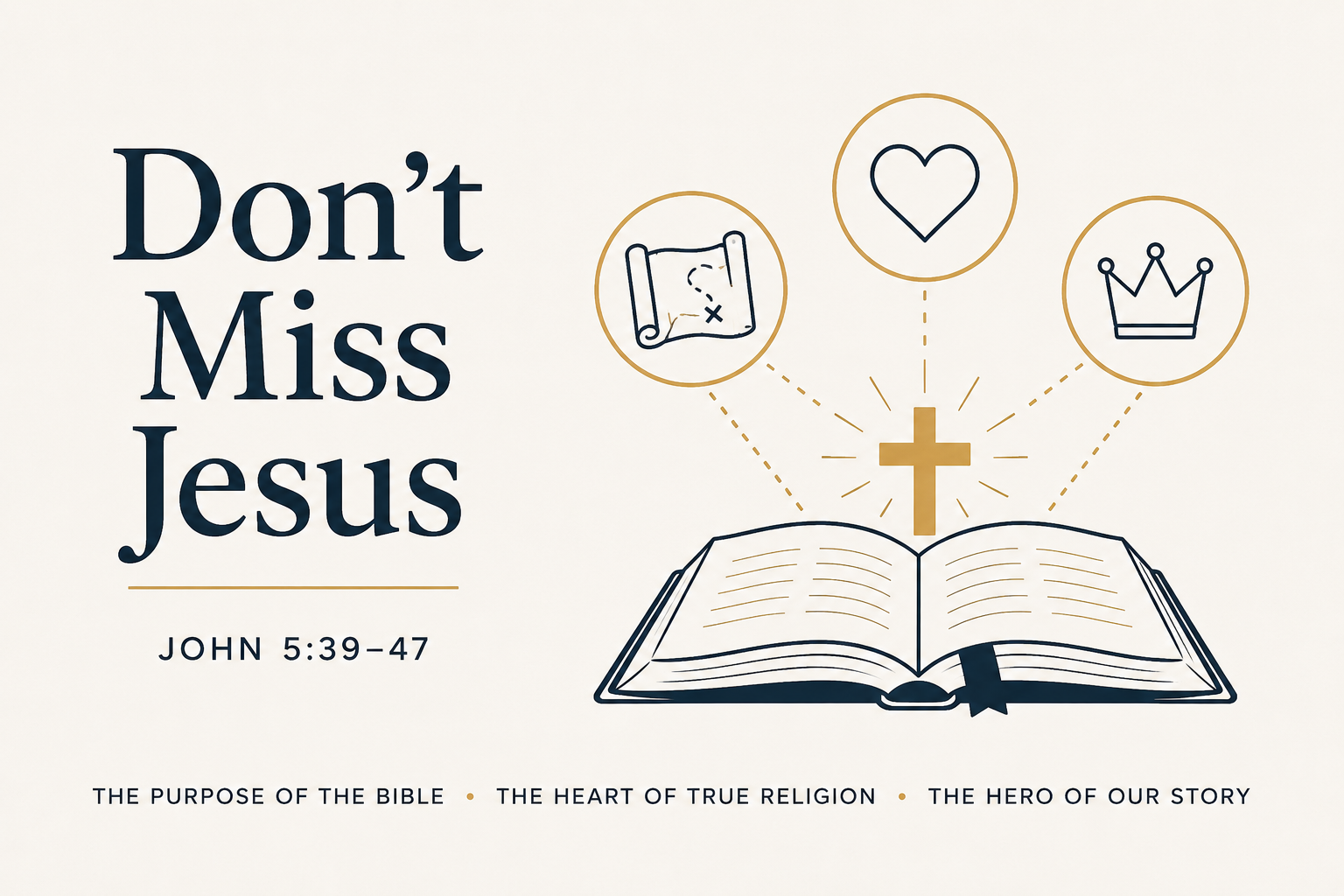
Why do religious people reject Jesus?
In John 5:30–47, Jesus confronts the religious leaders of His day with a sobering truth: it is possible to know the Scriptures, practice religion, and still miss the Savior. They searched the Scriptures, but failed to see that they pointed to Christ. They were devoted to religious activity, but lacked a genuine love for God. They admired Moses, yet missed the One to whom Moses pointed.
This sermon reminds us that the greatest danger is not merely rejecting Jesus through unbelief, but missing Him through outward religion. The Bible exists to lead us to Christ, true religion is marked by love for God, and Jesus alone is the hero of the biblical story—and of our lives.
Sermon Outline
Title: Don't Miss Jesus
Text: John 5:30–47
Big Idea: Don't miss Jesus.
Religious people reject Jesus because they miss the purpose of the Bible. (vv. 39–40)
The Scriptures point to Christ.
Bible knowledge without Christ cannot save.
Religious people reject Jesus because they miss the heart of true religion. (vv. 41–44)
True religion is loving God.
Outward religion without love is empty.
Religious people reject Jesus because they miss the hero of their story. (vv. 45–47)
Moses himself pointed to Christ.
Jesus is the hero of Scripture, history, and every Christian's life.
Study & Discussion Questions
According to John 5:39–40, what mistake were the religious leaders making when they searched the Scriptures?
Why is it possible to know a great deal about the Bible yet still miss Jesus?
What does Jesus reveal about the condition of the religious leaders' hearts in verses 41–44?
How does Deuteronomy 6:4–5 help us understand what Jesus means by "the love of God"?
In what ways can Christians today become more focused on outward religion than on loving God?
Why does Jesus say that Moses would testify against the religious leaders (vv. 45–47)?
How does the Old Testament point us to Christ? Can you think of specific examples?
Who or what are you tempted to make the "hero" of your story instead of Jesus?
How can you read the Bible in a way that continually leads you to know, love, and trust Christ more deeply?
After hearing this passage, what is one practical way you can make Christ more central in your Bible reading, worship, or daily life this week?